


Veteran Information
Date of Birth: Sept 1 1896
Date of Death: Sept 27 1946
Address: 19 Natoma St Rye NY
Branch of Service: U.S. Army
Service Number: 102nd Ammunition Train / 27th Division
Description

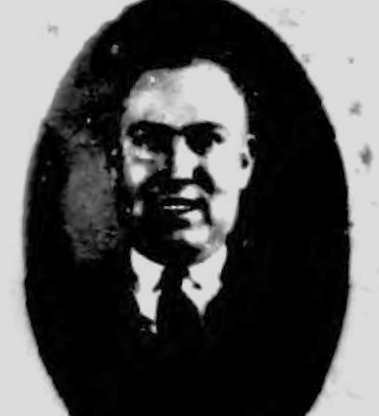
 Percy R. Billington
Percy R. Billington grew up in Rye, New York, where he was part of a community shaped by both long-established families and the expanding economic influence of nearby New York City. He attended local schools and graduated from Rye High School in 1914, reflecting a solid educational foundation during a period of increasing opportunity for young men in the region.
Following his graduation, Billington entered the financial sector, working as an assistant note teller at the Empire Trust Company in New York City. This position placed him within the professional workforce of Manhattan’s banking industry, indicating both responsibility and trust at a relatively young age.
At the time of his enlistment in the New York National Guard on April 2, 1917, he was living at home in Rye with his parents, Mr. and Mrs. Robert C. Billington of 19 Natoma Avenue. His transition from civilian employment in banking to military service reflects the broader mobilization of young men from professional and working backgrounds following the United States’ entry into World War I.
 World War I Service
 Percy R. Billington entered military service on April 4, 1918, when he enlisted in the New York National Guard at Fort Slocum, New York. He was assigned to the 102nd Ammunition Train, originally part of the 27th Division, a National Guard formation composed largely of New York units.
The 102nd Ammunition Train had previously been mobilized in 1916 for service along the Mexican border and was reactivated following the United States’ entry into World War I. The unit trained at
Camp Wadsworth, where its personnel received specialized instruction in transportation logistics, including the movement of ammunition by rail and sea, as well as the maintenance and operation of motor vehicles and horse-drawn wagons.
 When elements of the 27th Division departed for France, the 102nd Ammunition Train, as part of the 52nd Field Artillery Brigade, was temporarily delayed at Newport News, Virginia. Upon arrival overseas, the brigade underwent additional training at Camp Bar-le-Duc in France before being reassigned to the 33rd Division, which was operating under French command within the XVII Corps.
During his service in France, Billington served as a driver of an ammunition truck, holding the rank of Private and later Wagoner. This role was both critical and hazardous, requiring the transport of artillery shells and small arms ammunition from rear depots to forward positions under constant threat of enemy artillery fire, aerial attack, and difficult terrain. The effectiveness of artillery support and infantry operations depended heavily on the reliability of these supply lines.
 In early September 1918, the 52nd Field Artillery Brigade, including the 102nd Ammunition Train, moved into position with the 33rd Division along the west bank of the Meuse River near Verdun, with artillery headquarters established at Fromville. The brigade provided essential fire support during the St. Mihiel Offensive, beginning on September 12, the first major American-led attack of the war, which eliminated a German salient and demonstrated the growing effectiveness of coordinated American operations.
On September 26, 1918, Billington’s unit participated in the
Meuse–Argonne Offensive, the largest American campaign of the war. This offensive broke through heavily fortified German defensive lines and forced a sustained retreat, contributing directly to the end of the conflict. During this period, the 33rd Division advanced northwest of Verdun toward the Meuse River, while the 102nd Ammunition Train maintained the continuous flow of munitions required to support artillery operations across the front.
 On October 8, 1918, during operations along the Forges Road near the Meuse-Argonne front, Billington distinguished himself in an act of notable bravery. When a section of the 102nd Ammunition Train became stalled under heavy German shellfire, and many of the men had been killed or wounded, he remained at his post after others had withdrawn. Through determined effort, he helped extricate the immobilized trucks and ensured the delivery of urgently needed ammunition to forward battery positions at a critical moment when artillery units were in danger of running out of supply.
For this action, he received a formal commendation from Brigadier General Wingate, who wrote:
“The brigade munition officer has brought to my attention the meritorious service rendered by you on the morning of October 8, 1918, in assisting in extricating the stalled trucks of the 102nd Ammunition Train from the Forges Road and proceeding with them to the battery positions to which they were destined, in time to make the ammunition available for use by the batteries which were running out and needed it.
The spirit shown by you in standing by your trucks after the rest of the detail had left, and the capable and determined work done in moving them forward, is most highly commendable, and I desire to express my personal thanks for your part in this operation.“
Billington served overseas from June 28, 1918, to March 11, 1919, encompassing both the final major offensives and the occupation period following the Armistice. This commendation highlights both the danger of his role and the critical importance of ammunition transport during active combat operations.
His record indicates no wounds received in action. He was honorably discharged on April 3, 1919, following his return from overseas service.
 Life After Service
 Following the war, Billington returned to Rye and started his career in the shipping industry, advancing steadily within the field. He became freight traffic manager for major steamship companies, including the Hamburg-American Line and its successor organizations, and later held a similar position with the Prudential Steamship Corporation of New York.
He married Anne Beary in 1923, and together they had two children, Robert Billington and Claire Billington. The family resided at 19 Natoma Street in Rye, maintaining a strong connection to the community.
 Percy Raymond Billington died on September 27, 1946, at Columbia-Presbyterian Medical Center in New York City at the age of fifty.
At the time of his death, he was survived by his wife, Anne Beary Billington; his son, Robert Billington (US Army WWII); and his daughter, Claire Billington.
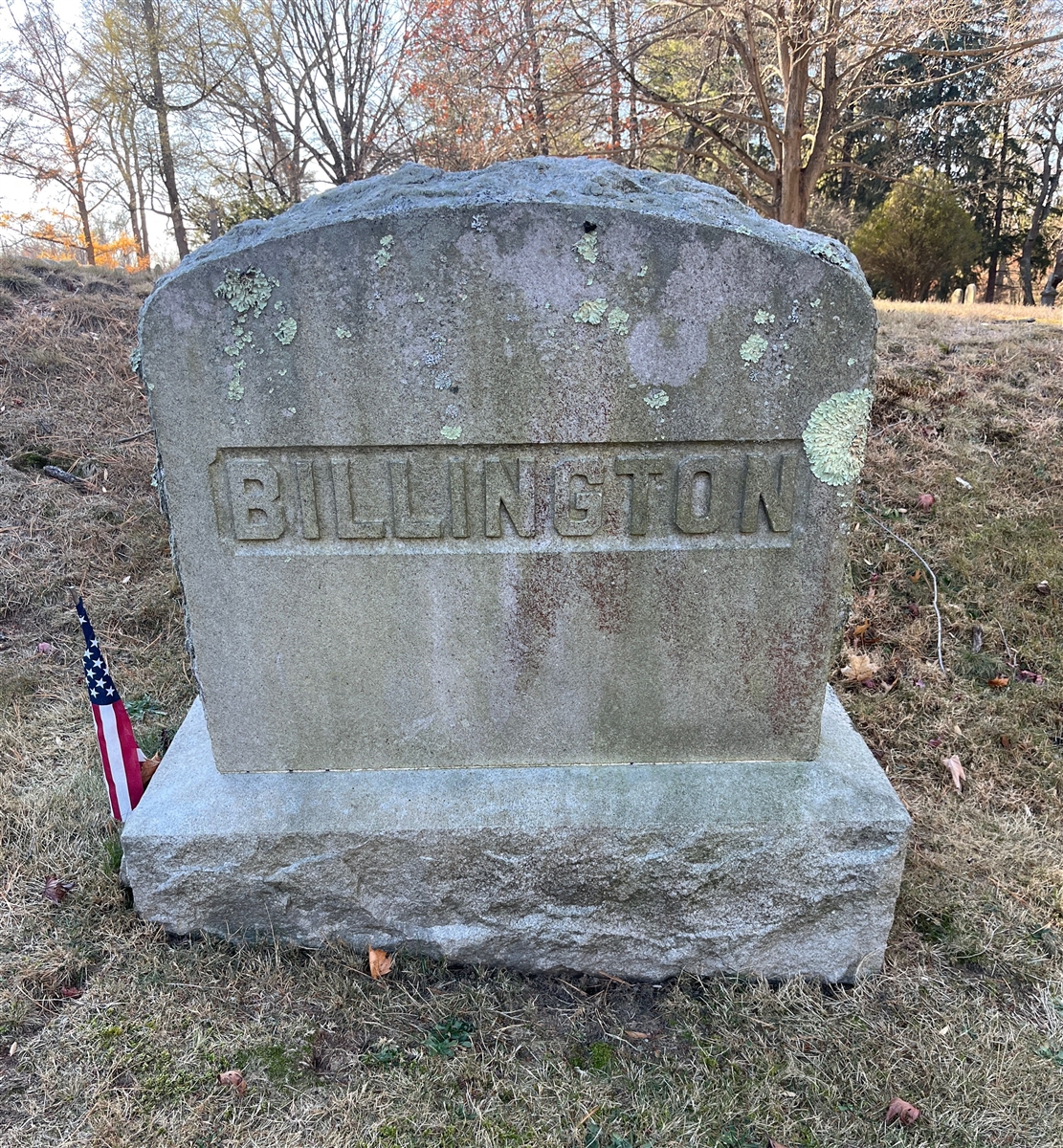
He was buried at Greenwood Union Cemetery in Rye, and his funeral service was held at Christ’s Church, reflecting his lifelong ties to the community.
Veteran History & Research Links
World War I Military Record
SEARCH ALL ANCESTRY
RYE CHRONICLE
Copy and Search for: "Percy R. Billington" Rye NY Chronicle - When searching, consider taking out middle initial, this can improve results in some cases.
(PLEASE READ THESE IMPORTANT INSTRUCTIONS BEFORE SEARCHING FULTON HISTORY FOR NEWPAPER ARTICLES)
Previous Search Results for this veteran may be listed below

EXPLORE MORE VETERANS
Jennys, Shirley S.
Read moreMERGENTHALER, GEORGE O.
Read moreHouston, Helene
Read more