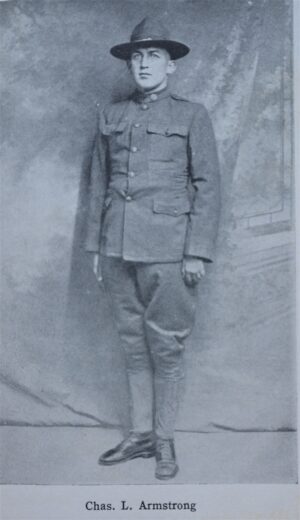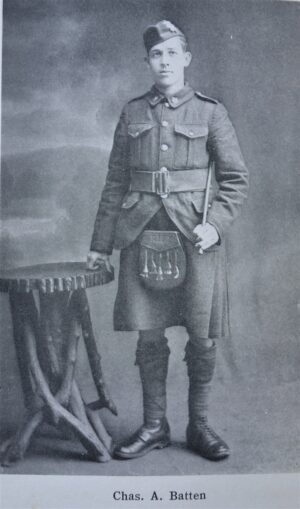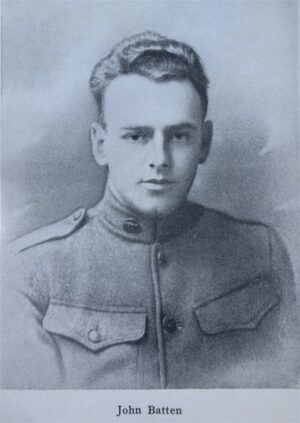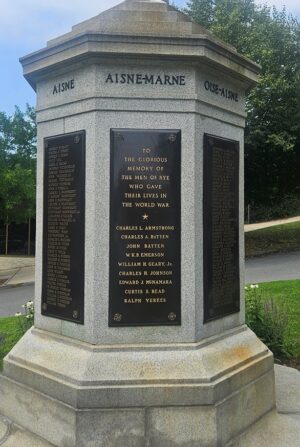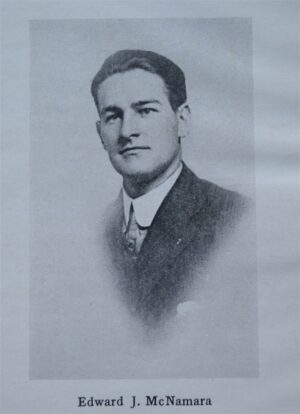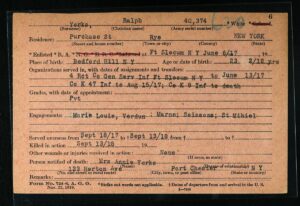

The veterans featured on this page made the ultimate sacrifice during World War I. Their names are engraved on Rye’s World War I Memorial and represent a community’s lasting remembrance of those who never returned home.
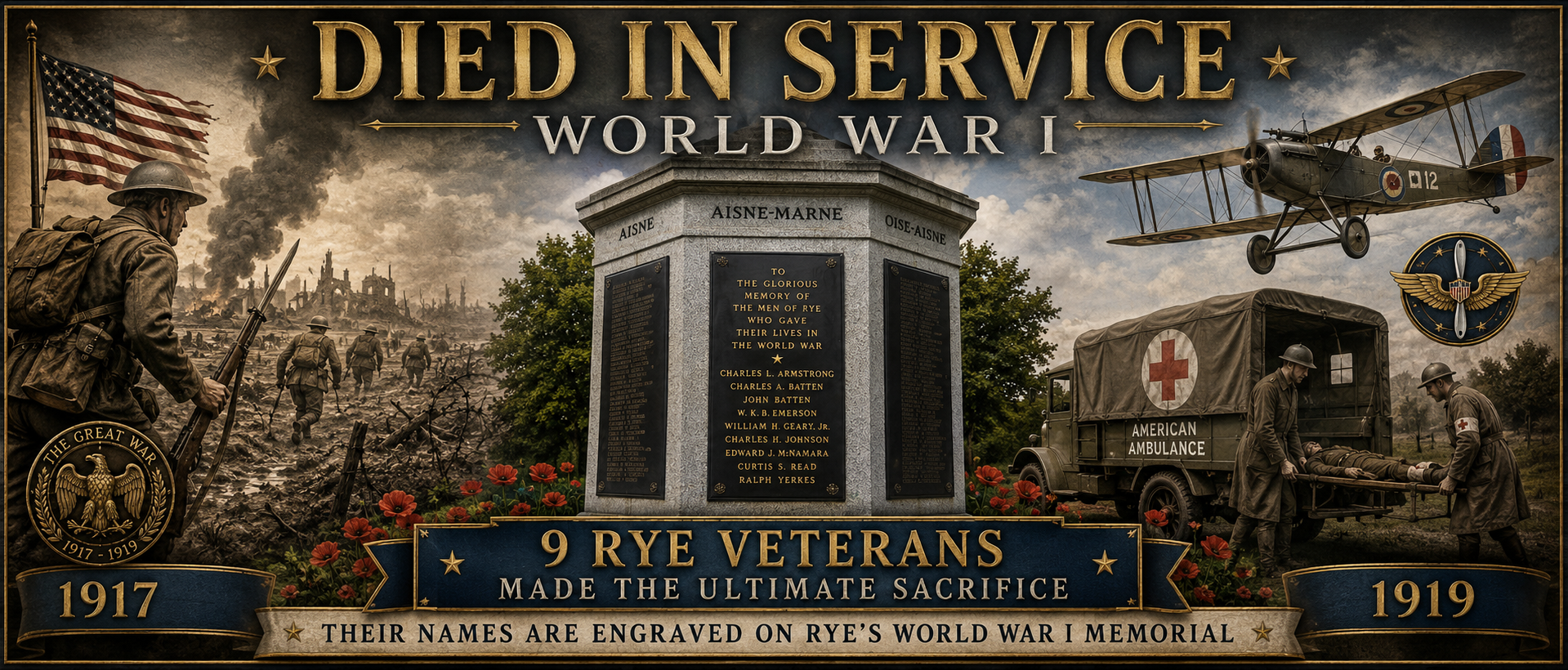
When the citizens of Rye erected their World War I Memorial during the early 1920s, they did so while the memories of the war remained fresh. The names engraved upon the monument were not selected by historians looking backward through time. They were placed there by a community remembering its own sons—young men who had walked the streets of Rye, attended its schools, worshipped in its churches, worked in its businesses, and answered their nation’s call during a time of global conflict.
Only nine names appear on the memorial, yet together they represent nearly every form of sacrifice experienced by Americans during the First World War. Among them were infantrymen killed in action, pioneers of military aviation, ambulance volunteers who served before the United States entered the war, soldiers who died from wounds received in combat, and men who survived the battlefield only to succumb to disease.
Their stories reflect the remarkable diversity of service performed by Americans during the Great War. Some fought in the trenches of France and Belgium. Some served with the famous 27th Infantry Division during the battles of the Ypres-Lys Offensive and the Somme Offensive. Others participated in the Battle of Saint-Mihiel, one of the most important American victories of the war. Still others served in the air as members of the nation’s earliest aviation units, helping establish a new form of warfare that was still in its infancy.
The men remembered here came from many different backgrounds. Among them were students of Yale, Harvard, Columbia, and other distinguished institutions. Others were carpenters, clerks, tradesmen, and working men whose lives reflected the everyday character of the community they served. In war, those distinctions disappeared. All wore their nation’s uniform and shared the same risks and hardships.
Several of the stories contained within this section are especially poignant. Members of the Batten family answered the call to service on both sides of the Atlantic. Sergeant John Batten of the 106th Infantry Regiment was killed in action in Belgium during August 1918. Just days later, his cousin Charles A. Batten, serving with the famed Royal Highlanders of Canada, was killed near Arras, France. Their deaths serve as a reminder that the burden of war was often borne not only by individuals, but by entire families.
The biographies also reveal another reality of World War I that is sometimes forgotten today. Not every wartime death occurred on the battlefield. Pneumonia, influenza, and other illnesses claimed thousands of lives during and immediately after the war. Charles Leonard Armstrong, William H. Geary, and Charles H. Johnson survived military service only to lose their lives to disease. Their sacrifice was no less real, and their names stand beside their fellow veterans on Rye’s memorial.
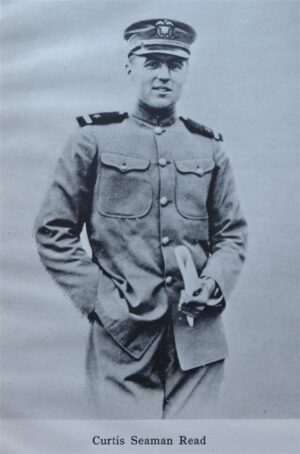
Aviation is another important part of this story. William K. B. Emerson and Curtis Seaman Read belonged to the generation of pioneers who helped establish American military aviation. At a time when flight itself was still a relatively new technology, these young men volunteered for some of the most dangerous duties in the armed forces. Their service represented the future of warfare, and their deaths remind us of the risks faced by those who ventured into the skies during the earliest days of military aviation.
Together, these nine men represent far more than a list of names carved in stone. They represent courage, duty, sacrifice, and the willingness of ordinary citizens to place service above self during a moment of extraordinary consequence. Their stories help us understand not only the war itself, but the community from which they came.
They were students, workers, athletes, sons, brothers, and friends.
They were Rye.
The biographies contained within this section seek to preserve their memory by telling the stories behind the names engraved on Rye’s World War I Memorial. Through military records, newspapers, photographs, family histories, and historical research, we attempt to answer a simple but important question:
Who were they?
By answering that question, we ensure that these veterans are remembered not merely for how they died, but for how they lived. As long as their names are spoken, their stories are told, and their lives are remembered, they remain part of the community they helped define.
We welcome assistance from family members, historians, neighbors, and community members who may possess photographs, military records, newspaper articles, letters, or personal memories relating to these veterans.
If you have information that can help improve a biography, please contact us at info@ryevets.org or use the Write A Review link located at the bottom of each veteran’s page.